
How to Choose the Right Coal Rod Briquette Machine Capacity?
该 Coal Rod Briquette Machine, also known as charcoal extruder machine, adopts screw‑extrusion technology to compress coal powder, charcoal powder and other raw materials into dense coal rods for barbecue, household heating and commercial fuel supply.
Selecting a suitable production capacity is the core step for project success. Too large capacity will cause waste of investment and energy; too small capacity cannot satisfy market orders, restricting business expansion.
Clarify Your Actual Production Target and Market Demand
Your market sales target directly sets the baseline for capacity selection of the Coal Rod Briquette Machine. You need to calculate expected daily output according to local market orders, distribution channels and sales forecast.
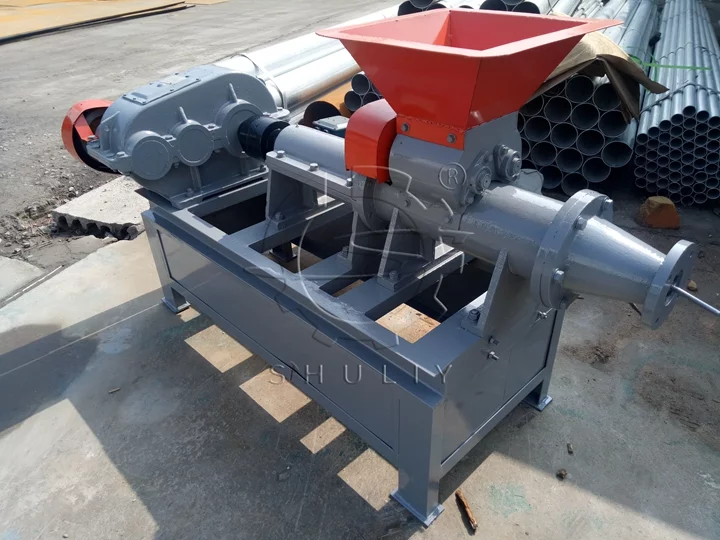
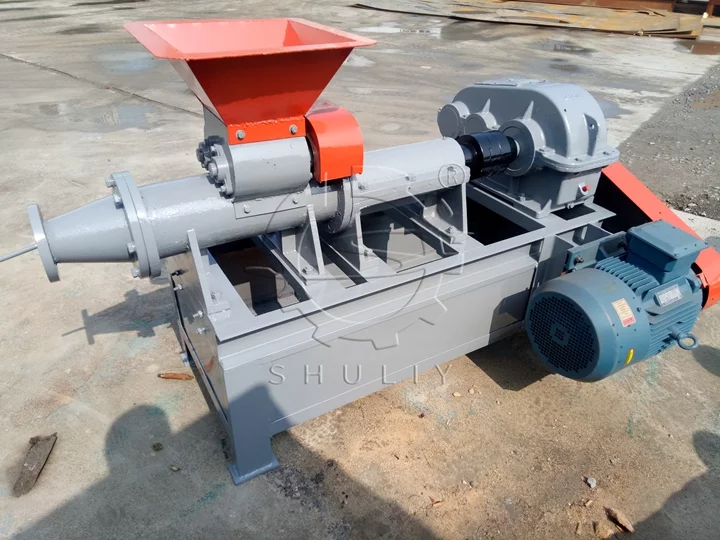
- For startup investors or small‑scale workshops testing market response: the WD‑CB160 model with 500 kg/h capacity is a typical option. If you operate 8‑10 working hours per day, the daily finished coal rod output can reach 4‑5 tons, which matches small‑batch local supply for barbecue retailers and household fuel customers.
- For mature commercial manufacturers with stable bulk orders: the WD‑CB180 model reaches 1000 kg/h capacity. Under continuous operation, daily output can hit 8‑10 tons, suitable for large‑volume supply to overseas buyers, such as the Iraqi coconut‑shell charcoal project case in the reference material.
Do not blindly pursue higher theoretical capacity. Distinguish between theoretical parameter data and real‑world working output. Raw‑material fluctuation, regular equipment maintenance and brief downtime will reduce actual hourly output. Keep reasonable production buffer when calculating your target capacity.
Evaluate Raw‑material Supply and Raw‑material Processing Conditions
Even if you buy a high‑capacity Coal Rod Briquette Machine, insufficient raw‑material supply will make high‑output performance impossible. Meanwhile, raw‑material quality parameters will also affect real‑machine capacity performance.
First, confirm your daily available quantity of coal powder, charcoal powder or grass powder. If your daily accessible raw‑material volume is only 5 tons, choosing a 1000 kg/h machine will lead to frequent idling of equipment, raising power‑consumption cost.
Second, pay attention to raw‑material pre‑treatment requirements. The Coal Rod Briquette Machine requires raw‑material particle size ≤ 3 mm, and moisture content controlled within 10‑15 % with proper binder added.
- If you lack supporting crushing, mixing and drying facilities, raw‑material quality cannot meet standards. The machine will get clogged frequently, and practical capacity will drop far below the nominal value.
- If your supporting pre‑processing equipment can only handle 600 kg per hour of qualified mixed powder, it makes no sense to purchase a 1000 kg/h main extruder. The whole‑line capacity is restricted by the weakest procedure. The capacity of the Coal Rod Briquette Machine must match your upstream crushing‑mixing‑drying system.
Check Power Supply, Workshop Space and Labor Condition
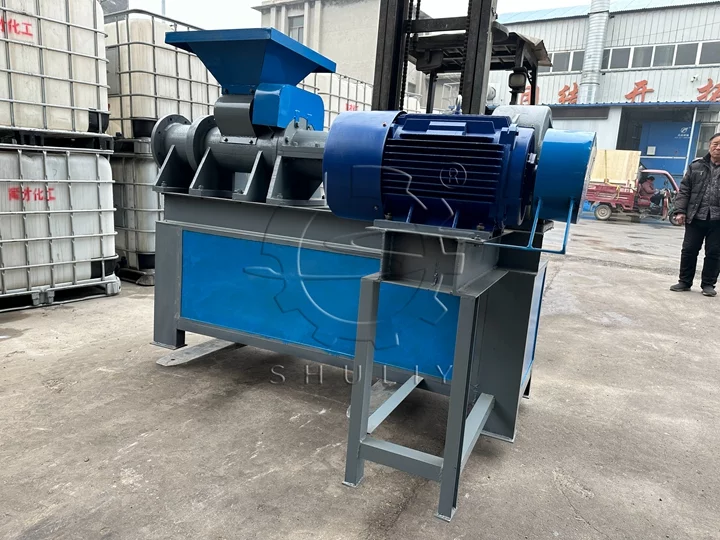
Different capacity grades of Coal Rod Briquette Machine differ greatly in motor power, overall dimension and site occupation, which must fit your factory’s objective conditions.
The WD‑CB160 (500 kg/h) is equipped with 11 kw motor, dimension 2050*900*1250 mm. It occupies small space, requires lower three‑phase power load, and can be operated by 1‑2 workers, fitting small workshops.
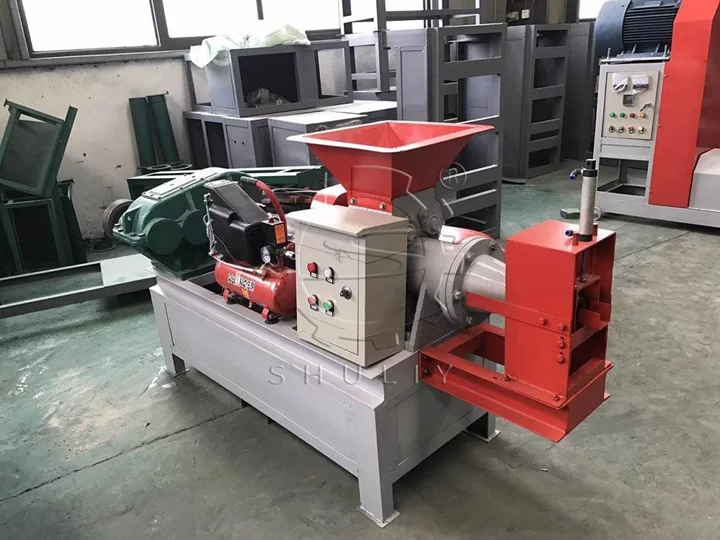
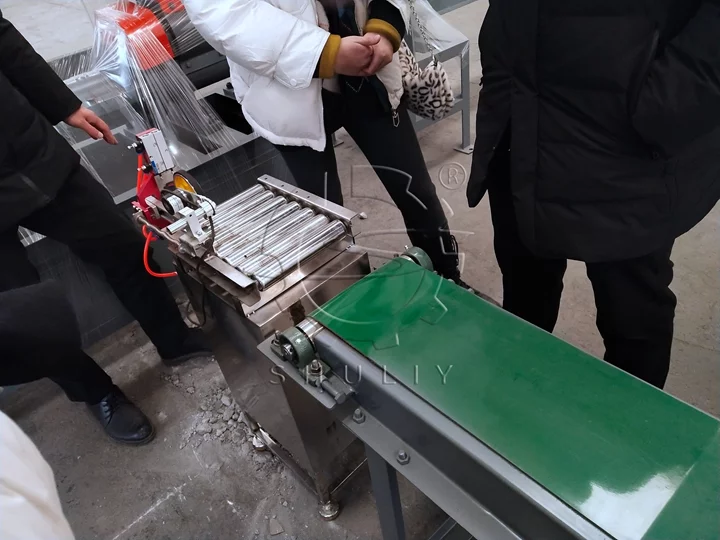
The WD‑CB180 (1000 kg/h) matches 22 kw power, dimension 2250*1400*600 mm. It demands higher power capacity of your plant, larger layout space for the host machine plus optional automatic cutter and belt conveyor accessories.
Before purchase:
- Confirm local industrial power can support the rated motor power of target model.
- Reserve space for auxiliary devices such as feeding hopper, cutting machine and conveyor belt.
- Estimate available operators. High‑capacity continuous production needs more staff for raw‑material feeding, finished‑product collection and equipment inspection.
Consider Budget, Return‑on‑investment and Future Expansion Plan
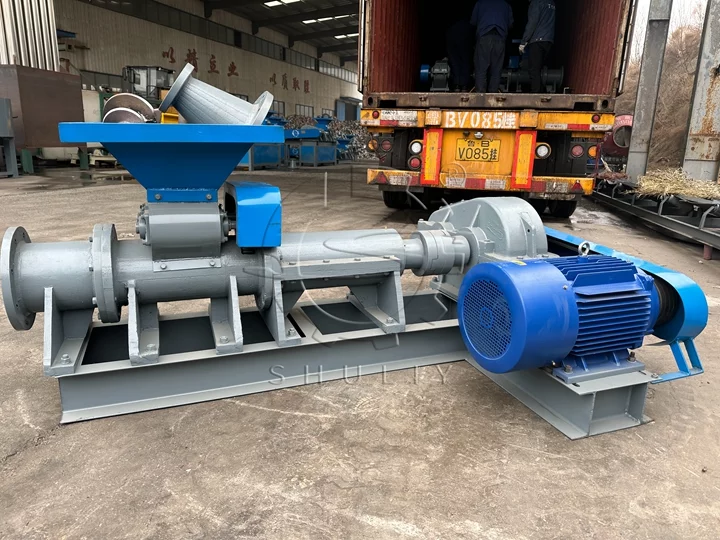
Capacity is closely linked to total investment of the Coal Rod Briquette Machine project, including host price, supporting equipment cost, electricity expense and maintenance cost.
Small‑capacity models feature low initial investment, lower daily power consumption and simple maintenance cost, suitable for new entrants to test charcoal‑rod business and control risk.
Medium‑capacity 1000 kg/h units have higher one‑time investment, yet bring higher output and better unit‑product profit for mass orders. For long‑term projects with stable sales, it brings faster payback period.
If you expect business volume to increase in 1‑2 years, two solutions are available:
- Option 1: Directly select medium‑capacity Coal Rod Briquette Machine in the early phase, reserve market expansion space.
- Option 2: Start with one small‑capacity unit, and add a second extruder machine when market demand rises. This avoids over‑investment risk in the initial stage.
结论
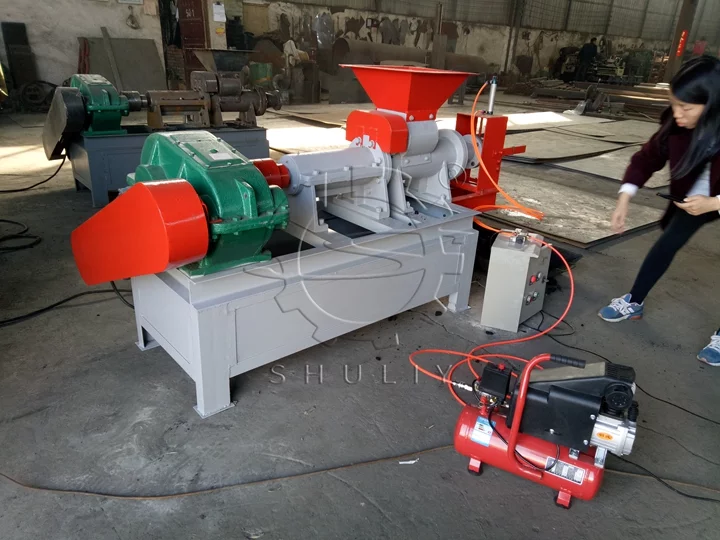
Choosing the suitable capacity for your Coal Rod Briquette Machine requires comprehensive analysis of market demand, raw‑material supply, factory infrastructure, capital budget and future business layout.
For beginners testing charcoal‑rod production, 500 kg/h model is a cost‑effective starting choice. For enterprises owning stable raw‑material sources and sales channels, the 1000 kg/h medium‑capacity unit can realize higher production benefit.
Always match the extruder host with the whole set of pre‑processing and post‑processing equipment, so your Coal Rod Briquette Machine can exert its full designed performance and bring stable profit for your charcoal‑making business.